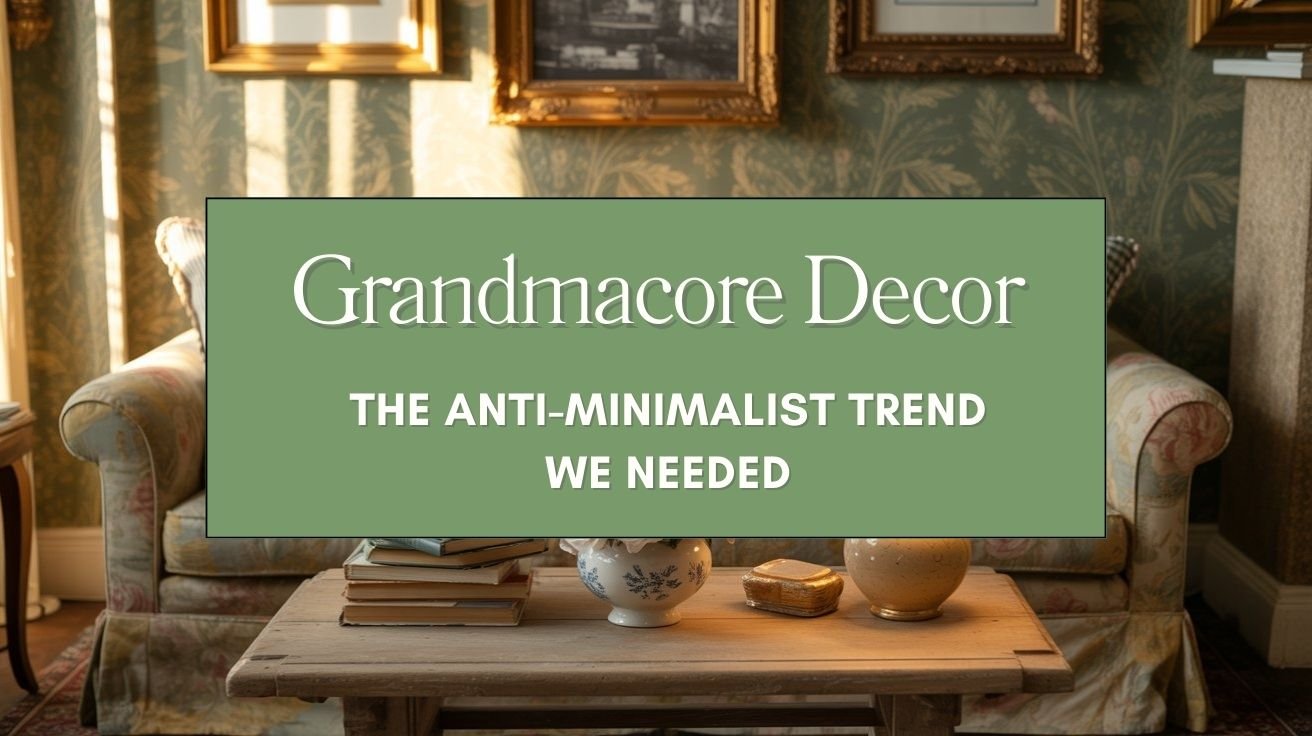

Grandmacore is officially the biggest home decor trend of 2026, and it is the breath of fresh air my home—and my soul—desperately needed. For a long time, I chased the “Showroom Standard”: perfectly matched furniture, sterile counters, and a house that looked great in photos but felt cold in person. I was constantly maintaining a set rather than actually enjoying my life.
But the shift is here. We are moving away from minimalist perfection toward spaces that feel fuller, warmer, and deeply personal. Grandmacore isn’t about carbon-copying a vintage house; it’s about reclaiming the warmth and emotional connection many modern homes have lost. It’s about creating a space that tells your story and makes you feel instantly at ease.
Let’s dive into how you can bring this cozy, collected feeling into your own home, step by step.
What You Might Need
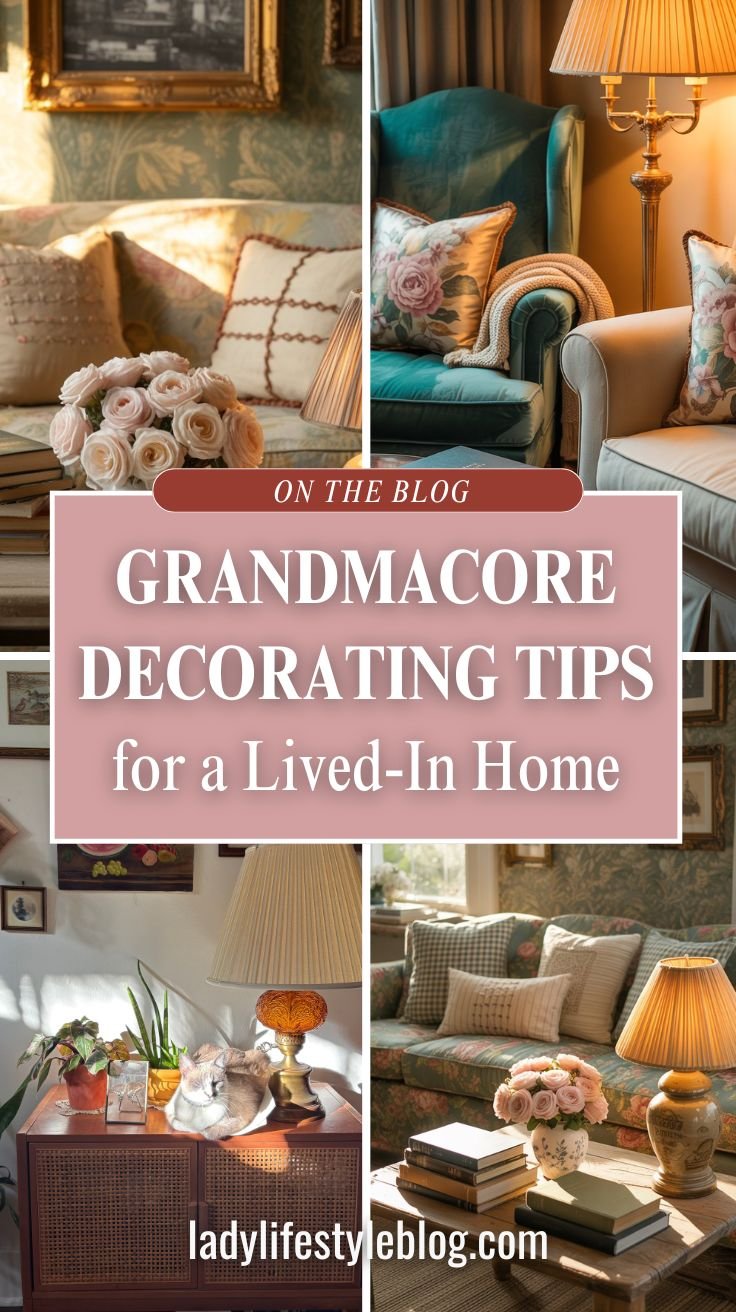
Before we start, here is a gentle checklist you can come back to as you slowly build your Grandmacore home over time:
- Thrifted or secondhand furniture
- Floral, gingham, striped, or vintage-style fabrics
- Patterned wallpaper or peel-and-stick wallpaper
- Pleated, ruffled, or textured lampshades
- Vintage-style frames, mirrors, and decorative trays
- Layered area rugs in different textures
- Open shelves or bookcases
- Books, keepsakes, and sentimental decor
- Accent paint for trim and small details
- Woven baskets and soft storage bins
You are not meant to buy all of this at once. Grandmacore works best when it grows slowly with you, season by season and memory by memory.
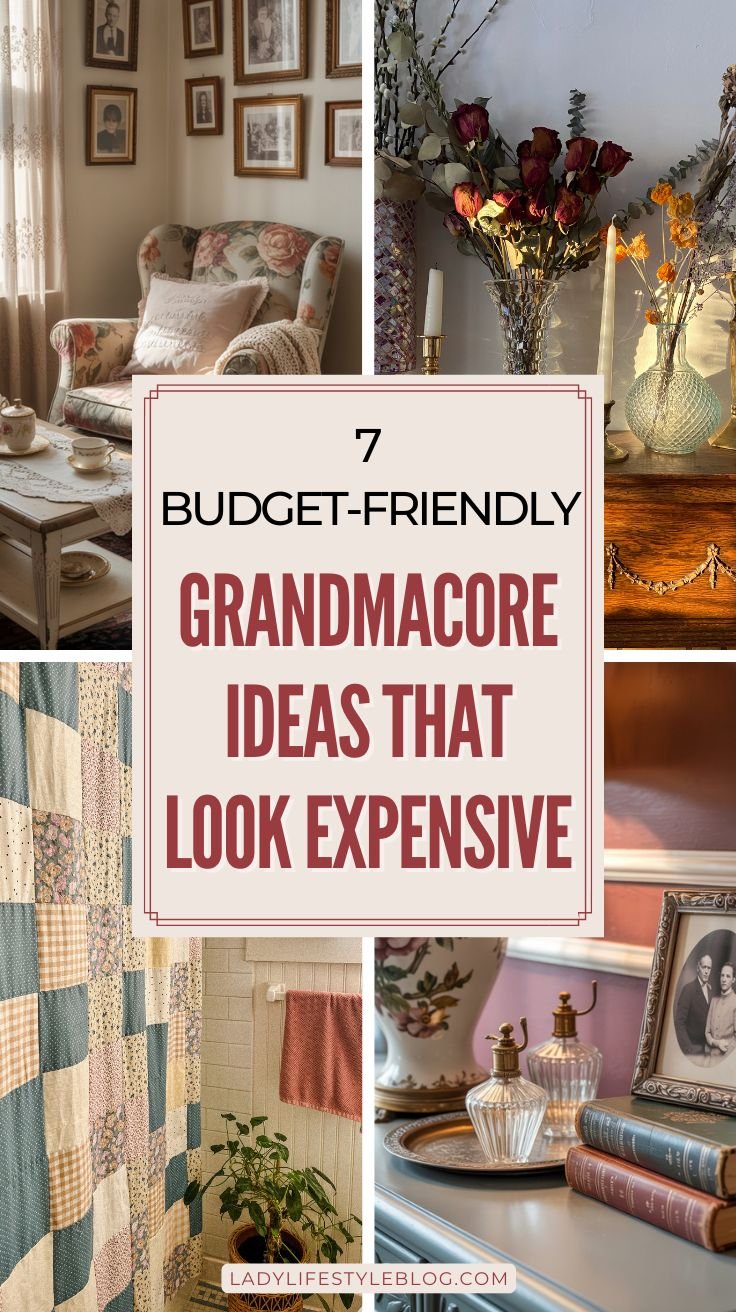
1. Collected, Not Curated
Let Your Home Grow Over Time Instead of Overnight
The true soul of Grandmacore lives in one simple idea: your home should look like it has been loved for years, not styled in one weekend. It should not feel like everything arrived in the same delivery truck or came from the same catalog page.
Instead, it should feel layered, personal, and gathered naturally over time. Every piece should feel like it belongs to your story.
Step-by-Step: How to Create a Collected Look
Step 1: Stop Relying on Matching Furniture Sets
- If your living room furniture all came from the same store at the same time, do not worry. Most of us started that way.
- Begin by slowly introducing contrast. Add a vintage armchair, a different wood side table, or a lamp that does not “match” but still feels right.
Step 2: Learn to Enjoy the Hunt
- Spend time in thrift stores, flea markets, antique shops, estate sales, and online resale apps.
- Go in without a strict shopping list. Let yourself browse. Some of the best Grandmacore pieces are the ones you did not plan to buy.
Step 3: Choose Emotion Over Perfection
- Instead of asking whether something looks trendy, ask whether it makes you feel something.
- If a piece reminds you of childhood, family, travel, or special moments, it belongs in your home, even if it is scratched or faded.
Pro Tip
Take photos of pieces you love when you are out shopping. Over time, you will start to notice patterns in what you are naturally drawn to, which helps you build a cohesive look.
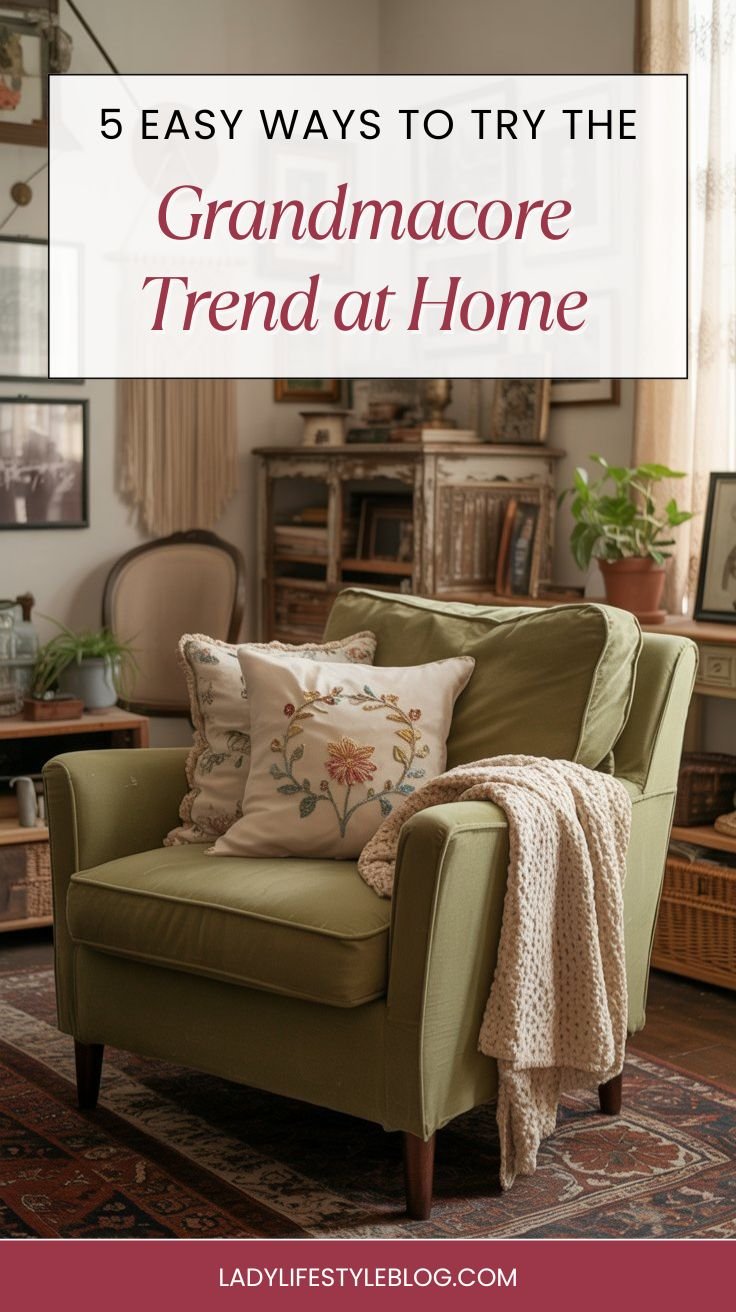
Picture This
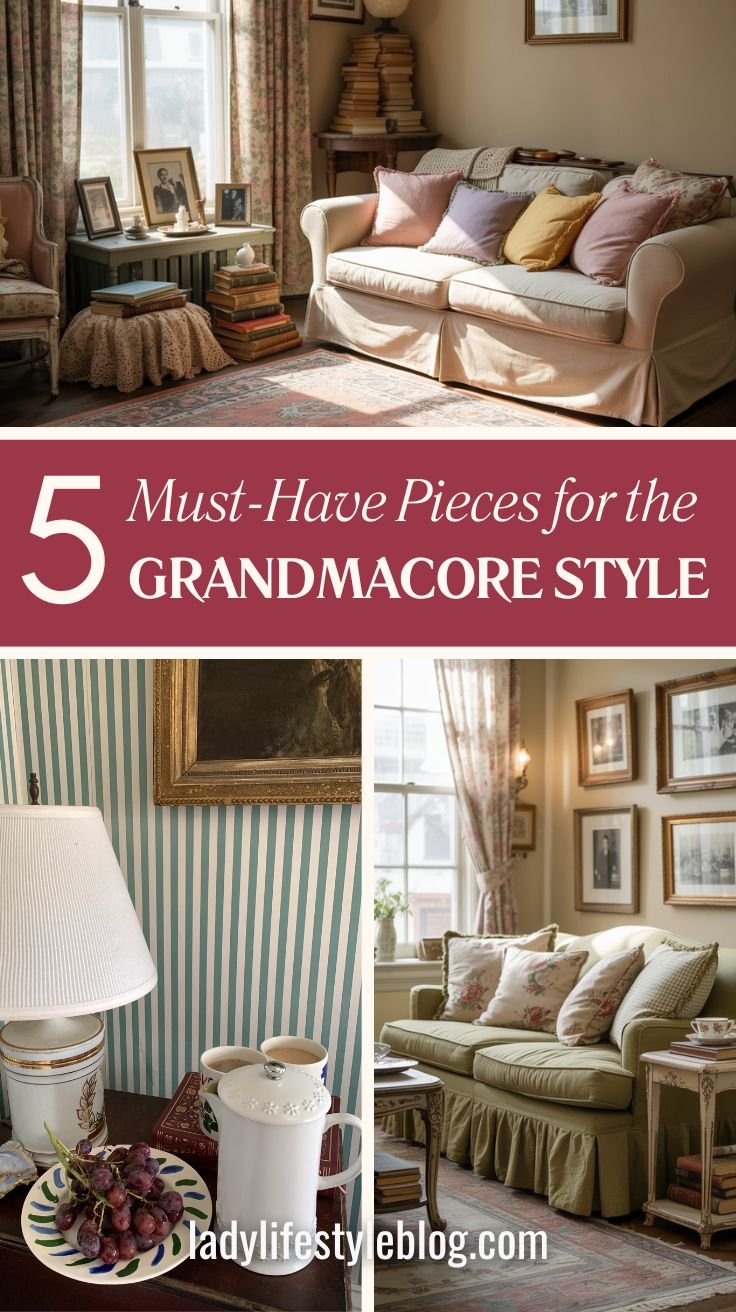
A living room filled with a softly worn sofa, a mismatched armchair, a vintage side table, and framed photos that quietly tell the story of your life.
2. Expert Pattern Stacking
How to Layer Prints Without Creating Visual Chaos
Grandmacore does not shy away from patterns. In fact, it celebrates them. Florals, stripes, gingham, and tiny vintage prints are often mixed together in the same room, creating depth and visual interest.
Step-by-Step: Mixing Patterns with Confidence
Step 1: Choose a Main Color Family
- Pick one or two main colors, such as dusty blue, sage green, soft rose, or warm beige, and use them as your foundation.
Step 2: Start with Textiles
- Begin with pillows, throws, bedding, or curtains before moving on to wallpaper.
Step 3: Balance Large and Small Prints
- Combine bold florals with smaller patterns and thin stripes to keep the space from feeling overwhelming.
Pro Tip
If every pattern in the room shares at least one color, they will naturally look connected instead of clashing.
Picture This
A bedroom with floral wallpaper, striped bedding, gingham curtains, and soft pastel accents that feel charming rather than busy.

3. Traditional Silhouettes
Why Classic Furniture Shapes Are Back
In 2026, we are slowly stepping away from ultra-modern, sharp-edged furniture and returning to softer, more traditional shapes.
These classic silhouettes feel comforting because they remind us of homes that have lasted through generations.
Look for These Timeless Pieces
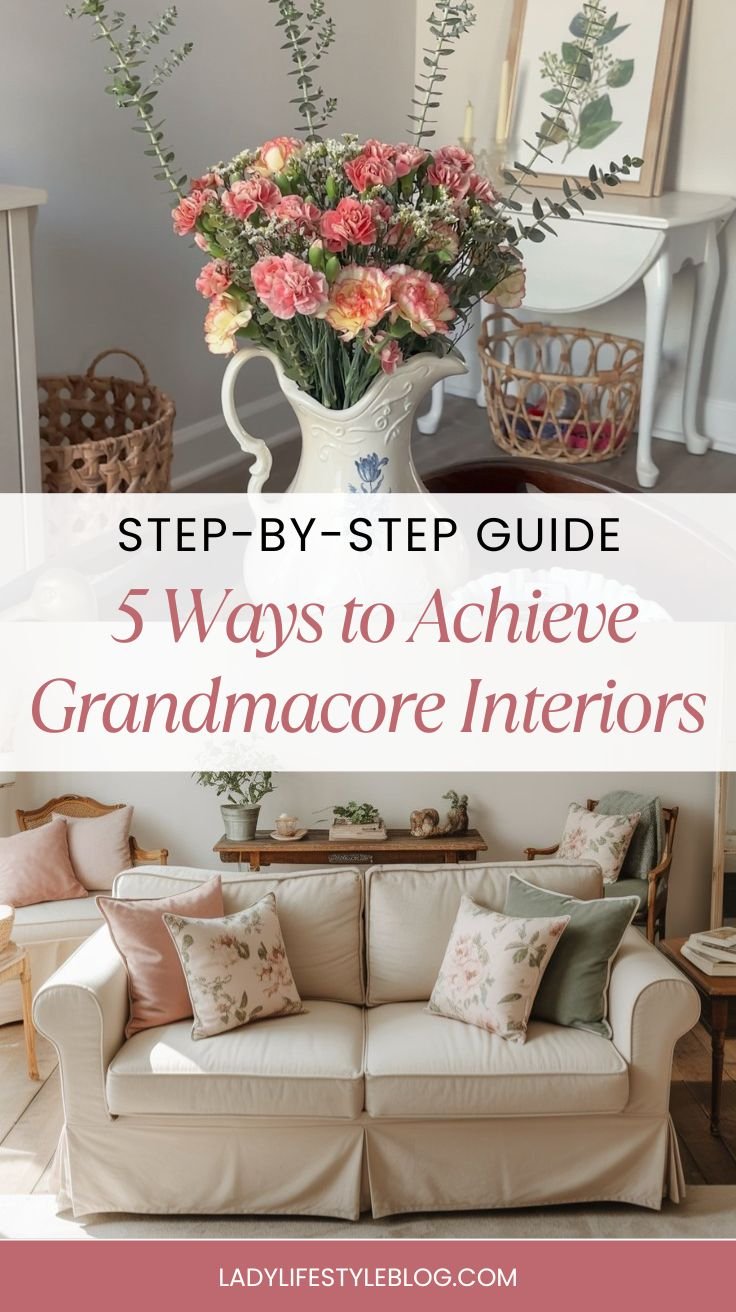
- Roll-Arm Sofas – Rounded arms and plush cushions that invite you to sink in after a long day.
- Wingback Chairs – Perfect for reading corners, bedroom seating, or quiet coffee moments.
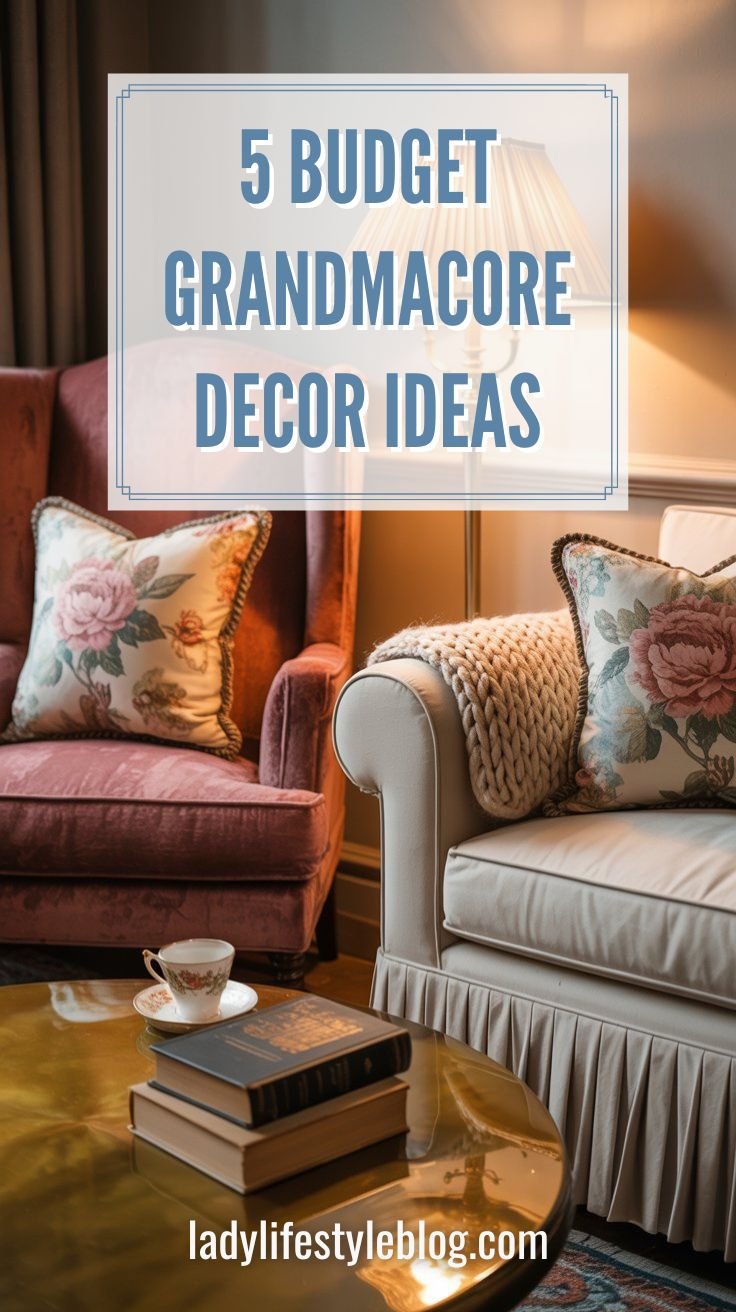
- Skirted Furniture – Sofas and chairs with fabric skirts are making a major comeback in Grandmacore spaces.
How to Style Traditional Furniture
- Layer pillows in mixed patterns
- Add soft throw blankets
- Place furniture near warm lighting
- Mix old and new pieces together
Pro Tip
Neutral traditional furniture works as the perfect backdrop for colorful and patterned accessories.
Picture This
A skirted sofa covered in floral pillows, a wingback chair by the window, and a warm lamp glowing in the corner.
4. It’s All in the Small Details
Where Grandmacore Truly Comes Alive
Grandmacore is not just about big furniture pieces. It shines in the tiny details that make a space feel thoughtful and intentional. These small moments are what make a home feel personal instead of generic.
Step-by-Step: Adding Meaningful Details
Step 1: Paint Your Trim
- Try soft pastel or muted tones on baseboards, window frames, or doors.
Step 2: Upgrade Lampshades
- Swap plain shades for pleated, floral, or textured versions.
Step 3: Refresh Hardware
- Replace basic knobs and pulls with vintage-inspired options.
Step 4: Style Surfaces with Care
- Add trays, framed photos, small vases, and stacked books to tables and shelves.
Pro Tip
Repeat similar colors and textures in different rooms to create a natural flow throughout your home.
Picture This
A reading nook with painted trim, a pleated lampshade, and framed family photos glowing in soft afternoon light.

5. Embrace Intentional Clutter
Why “Full” Feels Better Than “Empty”
Perhaps the most misunderstood part of Grandmacore is its relationship with clutter. This style does not promote mess. It celebrates meaningful layers. Every item should have a reason for being there.
Step-by-Step: Creating Intentional Clutter
Step 1: Display What Matters
- Show books, souvenirs, handmade items, and heirlooms that tell your story.
Step 2: Layer Your Decor
- Use rugs over rugs, tablecloths over runners, and blankets over sofas.
Step 3: Group Items Together
- Arrange objects in small clusters instead of scattering them randomly.
Step 4: Edit Gently
- Remove what feels empty or meaningless, but keep what brings joy.
Pro Tip
Think of this as curated comfort rather than chaos.
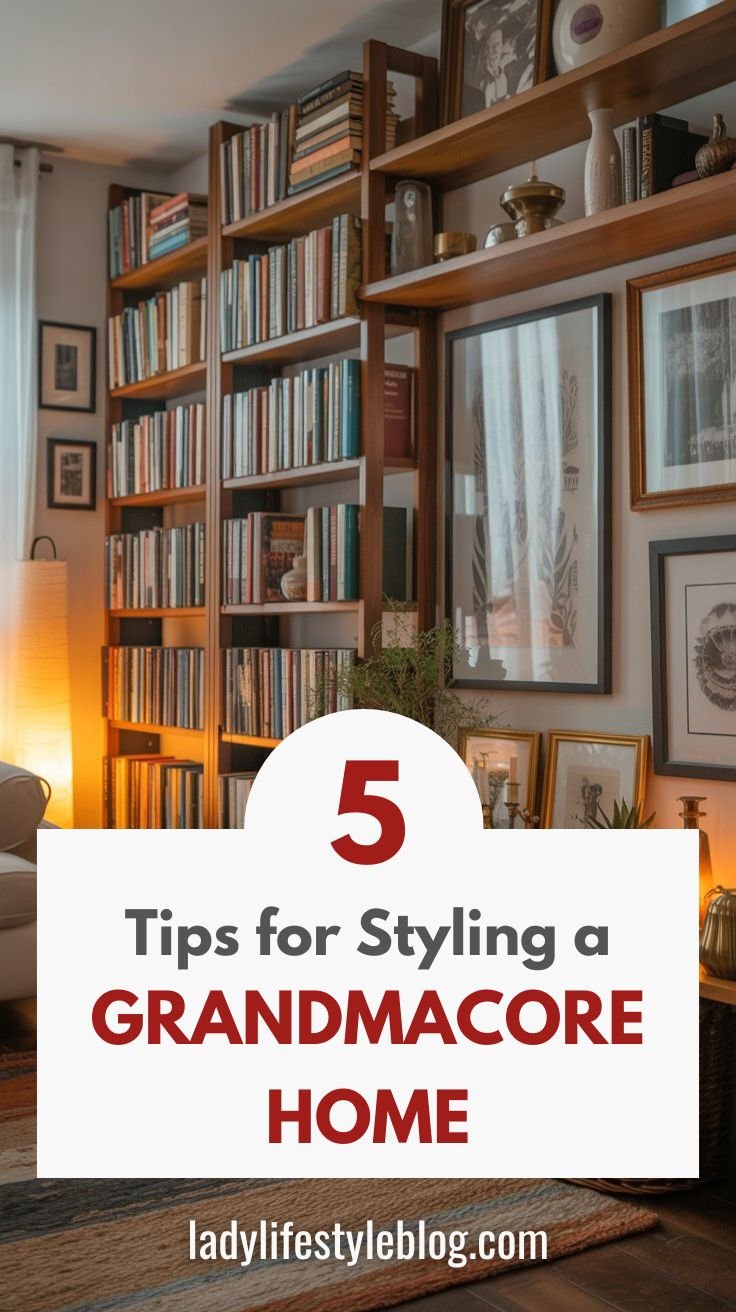
Picture This
Books stacked on tables, framed art leaning on shelves, layered rugs underfoot, and shelves filled with memories.
Crafting Survival Guide for Parents
If you are decorating with children at home, Grandmacore can actually work in your favor.
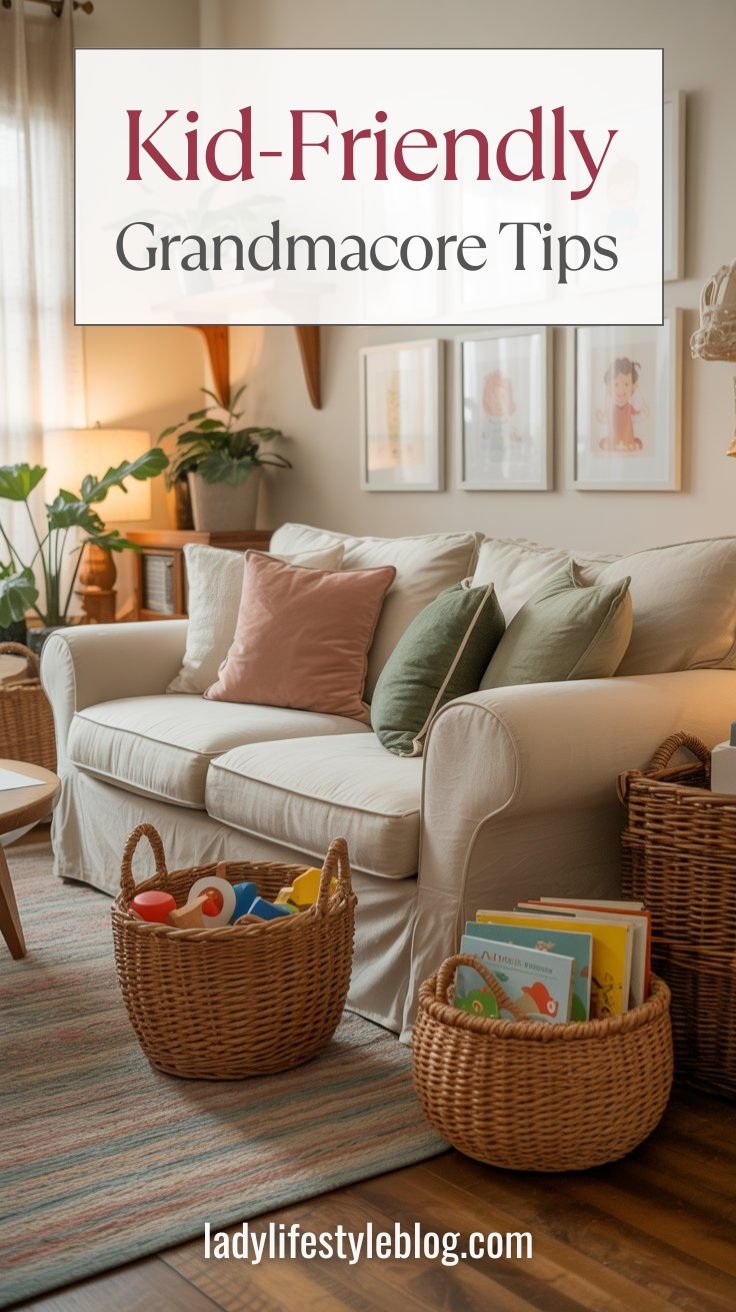
Kid-Friendly Grandmacore Tips
- Choose washable slipcovers
- Use baskets for toy storage
- Frame kids’ artwork in vintage frames
- Keep fragile items on higher shelves
- Rotate decor seasonally
This style welcomes real life, fingerprints, crafts, and all.
Frequently Asked Questions
Is Grandmacore just another version of cottagecore or farmhouse?
While Grandmacore shares similarities with cottagecore and farmhouse, it has a more personal and sentimental focus. Cottagecore leans toward romantic, nature-inspired aesthetics, while farmhouse emphasizes rustic simplicity. Grandmacore blends these elements with family heirlooms, thrifted finds, and meaningful clutter, making it more emotionally driven and less theme-based.
Is Grandmacore home decor expensive to create?
Not at all. One of the biggest advantages of Grandmacore is that it is naturally budget-friendly. Thrift stores, flea markets, estate sales, and secondhand marketplaces are the foundation of this style. Many of the most beautiful Grandmacore spaces are built with affordable, pre-loved pieces rather than expensive designer furniture.
Can Grandmacore work in small apartments or rental homes?
Yes, absolutely. Grandmacore works beautifully in small spaces when applied thoughtfully. Focus on vertical storage, wall shelves, compact vintage furniture, layered textiles, and removable wallpaper. In rental homes, peel-and-stick wallpaper, temporary trim paint, and decorative lighting can help you achieve the look without permanent changes.
How do I keep Grandmacore from looking cluttered or messy?
The key is intention. Every item in a Grandmacore home should feel meaningful, useful, or emotionally important. Group similar objects together, use trays and baskets to contain smaller items, and regularly edit what no longer feels special. Think of it as “curated comfort” rather than uncontrolled clutter.
What colors work best for a Grandmacore-style home?
Grandmacore favors soft, muted, and nostalgic color palettes. Popular choices include dusty blues, sage greens, soft pinks, warm creams, faded yellows, and gentle browns. These colors create a calm backdrop that allows patterns, textures, and vintage pieces to shine without overwhelming the space.
Can I mix Grandmacore with modern or minimalist decor?
Yes, and in many cases, this balance makes the space even more beautiful. Mixing a few clean-lined, modern pieces with softer Grandmacore elements can prevent the room from feeling too heavy. For example, a simple sofa can be layered with floral pillows and vintage throws to create harmony between old and new.
How do I start if my home is currently very minimal?
Begin with one room and one layer at a time. Start by adding patterned cushions, a textured rug, a vintage lamp, or framed photos. Once you feel comfortable, slowly introduce more textiles, furniture, and decor. Grandmacore works best when it grows gradually rather than all at once.
Is Grandmacore suitable for families with children or pets?
Yes, it is one of the most family-friendly decor styles. Because Grandmacore embraces real life, it is naturally forgiving. Choose washable fabrics, slipcovered furniture, durable rugs, and closed storage baskets. Small imperfections and everyday wear only add to the charm over time.
How long does it take to create a true Grandmacore home?
There is no timeline. A true Grandmacore home is never “finished.” It evolves as you collect new memories, objects, and experiences. Some rooms may come together quickly, while others develop over years. That slow, organic growth is what gives the style its authenticity and emotional depth.
Final Thoughts: Why Grandmacore Feels So Right in 2026
Ultimately, Grandmacore is a return to comfort and individuality. In 2026, we are finally giving ourselves permission to stop chasing “flawless” and start embracing “familiar.”
For me, this style is a relief—an invitation to decorate with pieces that make me feel safe and happy rather than what’s “on-trend.” You don’t need to overhaul your life overnight. Start small: a thrifted frame, a textured lampshade, or a stack of well-loved books. Let your home grow naturally, because the best spaces don’t look staged; they look like they were built for a life well-lived.
For even more cozy inspiration, you can also explore my Pinterest board, Cottagecore Aesthetic, filled with soft, nostalgic home ideas that pair beautifully with the Grandmacore style.
At Lady Lifestyle Blog, I use AI as a tool to assist with research, idea generation, and content refinement. While much of my content is shaped with AI’s help, I personally review and adjust each post to ensure it aligns with the blog’s style and purpose. My focus is on providing stylish, creative, and practical inspiration for every modern lady!